7 Essential Tips for Feeding Birds in Your Backyard This Fall
7 Essential Tips for Feeding Birds in Your Backyard This Fall
As summer gradually fades and autumn takes its place, significant changes occur in the world of our feathered friends. Some species embark on their migration journeys, while others prepare for the cold months ahead. Providing the right diet and environment is crucial for birds visiting your yard during this transition.
Changing Dietary Needs
During summer, birds feast on high-protein insects and fresh berries, essential for nurturing their young. However, as the fall arrives, insects dwindle, and birds’ dietary requirements transform. To brace for migration or the coming winter, these tiny creatures need to bulk up, consuming seeds and nuts rich in fat and carbohydrates, especially migratory species that eat a lot to store energy.
Feeding Birds Does Not Prevent Migration
A common myth suggests that feeding birds keeps migratory species from leaving; however, migration is an instinctive behavior, and no amount of sunflower seeds or peanuts will alter that. Ensuring food sources are readily available at feeders can, however, assist these travelers along their route.
Hyperphagia
As the seasons change, hormonal fluctuations trigger hyperphagia in migratory birds, leading them to experience extreme hunger. They need to eat continuously to store fat, sometimes doubling their body weight before migration.
Caching
Birds preparing for winter begin to cache food by hiding seeds and nuts in trees, under leaves, and in the ground. Species like chickadees, blue jays, nuthatches, and titmice engage in this behavior to ensure they have food available during leaner months when foraging becomes difficult.
Tips for Supporting Backyard Birds
To help your local birds thrive during the cooler months, follow these essential tips:
1. Keep Those Feeders Topped Up
With hyperphagia in migratory birds and caching behavior in locals, the need for food increases. Regularly check your feeders and refill them as needed. It’s beneficial to have multiple feeders offering different food types to attract various bird species.
2. Offer High-Energy Food
To sustain their energy needs, provide high-calorie foods with ample carbohydrates and fats. Consider offering:
- Sunflower seeds (both shelled and unshelled)
- Peanut butter
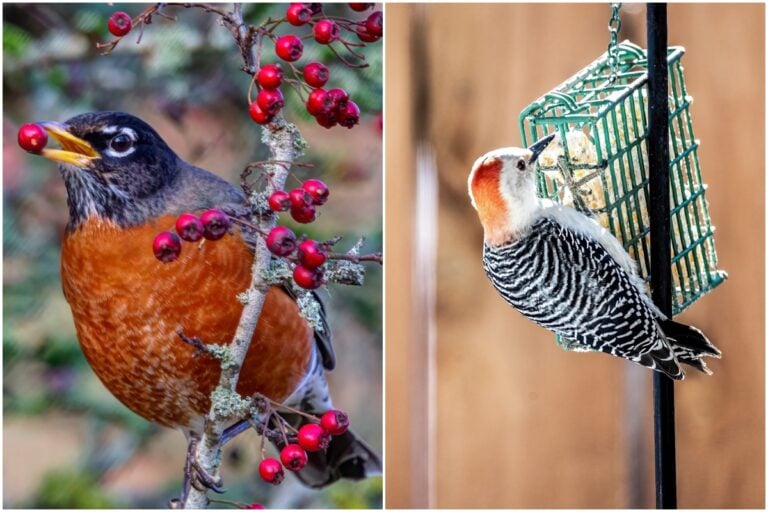
- Suet cakes (easy to make at home)
- Peanuts
- Thistle seeds
- Raisins
- Cracked corn
Engage younger bird watchers by involving them in creating birdseed ornaments to hang around the yard while taking note of the various birds that visit.
3. Maintain Hummingbird Feeders and Oriole Stations
When fall arrives, many tend to pack away hummingbird and oriole feeders, assuming these birds have migrated. However, keeping these feeders clean and stocked is vital as migratory birds passing through may rely on them for sustenance during their long travels.
4. Provide Fresh, Clean Water
Birdbaths attract birds year-round, and fresh water is just as essential in the fall. Consider adding a birdbath heater to ensure constant access to water even when temperatures dip below freezing. Regular cleaning is necessary to prevent the spread of avian diseases.
5. Fall Tidying Do’s & Don’ts
Autumn is an ideal time to clean out nest boxes, ensuring a safe environment for the next generation. Store them indoors to avoid weather damage until spring. However, when tidying your garden, leave some areas a bit messy. Allowing flowers to go to seed and leaving piles of leaves provide natural food sources and shelter for insects, which benefit wintering birds.
6. Provide Extra Food During Bad Weather
As winter storms loom, remember your backyard birds. Before inclement weather strikes, top up feeders and keep them well-stocked. Birds need the extra energy during frigid temperatures, so ensure they are well-fed.
7. Consider Planting Wintertime Food
Planting trees that produce berries can provide birds with a natural food source in winter. Various species offer delightful fruits, ensuring your feathered friends are nourished while adding beauty to your yard.
Conclusion
This fall, remember to take the time to enjoy the rich interactions with the birds in your yard. Make yourself a cozy cup of tea, settle by the window, and watch as a delightful array of birds flock to your feeders, benefitting from the environment you’ve nurtured for them.