7 Essential Tips for Feeding Birds in Your Backyard This Fall
7 Essential Tips for Feeding Birds in Your Backyard This Fall
As summer fades and autumn takes center stage, significant changes occur in the lives of our feathered friends. Some species prepare for migration while others gear up for colder weather, both requiring a dietary adjustment. Whether you’re a year-round bird feeder or just starting this fall, keep these essential tips in mind to create a welcoming environment for the birds visiting your yard.
Changing Dietary Needs
Throughout summer, birds indulge in high-protein insects and fresh berries, essential for nurturing their fledglings. As fall arrives, insects become scarce, and birds need to switch to a different diet. During this season, they focus on gaining weight and storing energy for migration or winter survival, which means consuming more seeds and nuts that are rich in fats and carbohydrates.
Feeding Birds Does Not Prevent Migration
It’s a common misconception that feeding birds keeps migratory species from leaving. Migration is instinctual and deeply ingrained in birds. While backyard feeders won’t stop them from migrating, having food available along their route can significantly aid their journey.
Hyperphagia
Migratory birds experience a phenomenon known as hyperphagia, where hormonal changes lead to insatiable hunger. They consume large amounts of food, often doubling their weight, to prepare for long flights ahead.
Caching Behavior
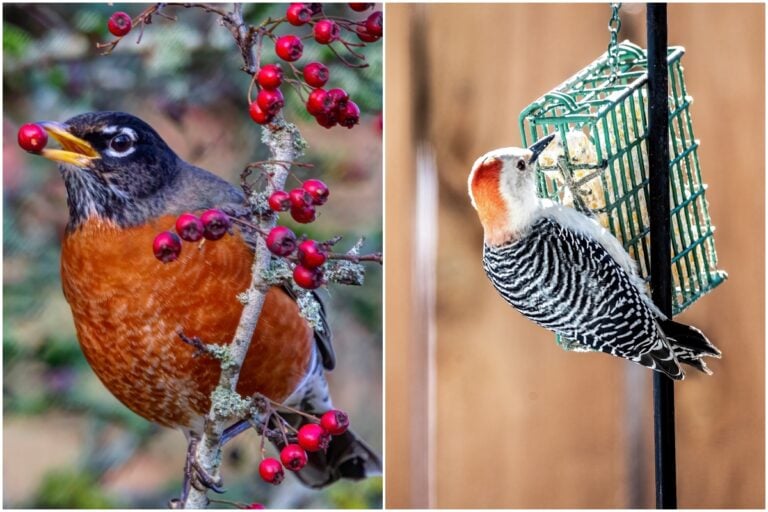
As winter approaches, some birds will begin storing seeds and nuts. They hide food in tree crevices, under leaves, and in the ground to ensure they have resources during harsh winter months when foraging is tough. Birds like chickadees, blue jays, nuthatches, and titmice exhibit caching behavior.
With fall being the busiest season at bird feeders, here are seven tips to help your local bird population as the weather cools down.
1. Keep Those Feeders Topped Up
With hyperphagia in migratory birds and caching in local species, it’s crucial to keep your feeders full. Regularly check and replenish them, ensuring you have various feeders with different food types to attract diverse species. Filling feeders with smaller quantities more frequently can prevent spoilage and adjust to the number of birds visiting.
2. Offer High-Energy Food
In the fall, birds require high-energy foods packed with carbohydrates and fats. Here are some excellent options:
- Sunflower seeds (shelled and unshelled)
- Peanut butter
- Suet cakes (easy to make at home)
- Peanuts
- Thistle seeds
- Raisins
- Cracked corn
Engage the kids in making birdseed ornaments and hanging them in your yard, creating a fun way to observe the different bird species that visit.
3. Keep Hummingbird Feeders and Oriole Fruit Stations Ready
While preparing your yard for fall, resist the urge to store away hummingbird and oriole feeders. Even though these birds migrate, many others may stop by en route. Keeping feeders clean and ready can provide much-needed sustenance for migrating birds, making your yard a vital pit stop.
A good rule is to store seasonal feeders if no visitors have shown up for at least three weeks.
4. Continue Providing Fresh, Clean Water
A birdbath can attract birds to your yard year-round. It’s essential to provide fresh water during fall, and installing a birdbath heater ensures water access even in freezing temperatures. Regular cleaning is also vital to prevent the spread of avian diseases.
5. Fall Tidying Do’s & Don’ts
Fall is an ideal time to clean out nest boxes post-breeding season. Keeping them clean ensures they’re ready for the next generation. However, while tidying your garden, leave some areas a bit unruly. Allow flowers to go to seed and let leaf litter or dead plant matter remain, as it provides food sources and shelter for insects that birds will happily consume during winter.
6. Provide Extra Food During Bad Weather
When winter storms are forecasted, you might run to the store for essentials. Don’t forget your backyard birds! Top off feeders before inclement weather hits and keep them filled. Birds need extra energy to survive frigid temperatures.
7. Consider Planting Wintertime Food
Planting berry-producing trees can enhance your yard’s appeal while providing winter sustenance for birds. Several species offer delicious fruits for feathered friends, ensuring they have plentiful food sources throughout the colder months.
Conclusion
This fall, enjoy the beauty of nature from your window while sipping a cup of tea. By following these tips, you can create a thriving environment for birds in your backyard, making a difference during their most critical time of the year.