Grow 1001 Roots Overnight by Sticking a Rose Branch in Water! Discover How!
How to Grow New Plants from Rose Cuttings in Water
Introduction
If you’ve ever admired a beautiful rose bush and thought about propagating your own, you may have wondered how to achieve this. Starting new plants from existing rose cuttings can seem daunting, yet it’s a fulfilling project that can yield stunning results. The process of growing new plants from your favorite roses by sticking a branch in water can be both easy and rewarding. Keep reading to learn the essential steps and tips for success.
Required Materials
To successfully grow new plants from rose cuttings, you’ll need the following materials:
- Healthy rose cuttings: Look for stems that are around 6 to 8 inches long with at least a couple of leaves.
- Sharp scissors or pruning shears: Ensure they are clean to prevent disease.
- A glass jar or vase: This will hold the cuttings in water.
- Water: Use room temperature water, preferably filtered or distilled.
- Optional rooting hormone: This can help stimulate root growth but is not essential.
Step-by-Step Process
Follow these simple steps to start growing your new rose plants:
- Cut the stem: Take your scissors or shears and cut a healthy stem from the rose bush. Make the cut just below a node, where leaves meet the stem.
- Prepare the cutting: Remove any excess leaves from the lower part of the cutting, leaving just a couple of leaves at the top.
- Optional: If using rooting hormone, dip the cut end of the stem into it, ensuring it’s well-coated.
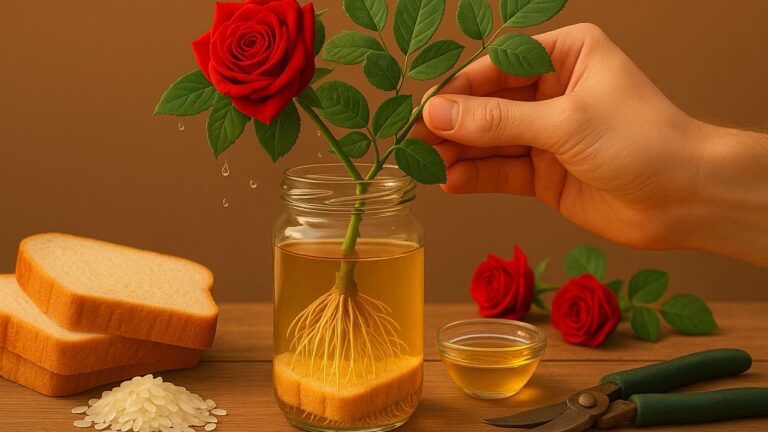
- Place in water: Fill your jar or vase with water and put the cutting in it, ensuring the cut end is submerged.
- Choose the right location: Set the jar in a sunny spot, but avoid direct sunlight. A windowsill can be a perfect choice.
- Monitor water levels: Make sure the cut end remains submerged and change the water every few days to keep it fresh.
- Be patient: Roots should start forming within a few weeks. Once they are a few inches long, you can transplant the new plant into soil.
Care Tips During Rooting
While your cuttings are rooting, here are some tips to ensure they thrive:
- Keep the water clean to prevent rot.
- Check for any signs of mold or decay, and remove affected cuttings immediately.
- Consider placing a plastic bag over the jar to create humidity, but make sure there is airflow to prevent mold.
Transplanting Your New Rose Plant
Once your roots have developed, it’s time to move your new plant into soil:
- Choose a pot: Select a pot with drainage holes and fill it with well-draining potting soil.
- Plant the cutting: Make a small hole in the soil and gently place your rooted cutting, covering the roots with soil. Water it lightly.
- Continue care: Keep the new plant in a bright location and water as needed. Gradually acclimate it to outdoor conditions if you plan to plant it outside.
Common Mistakes
To enhance your success rate, be aware of these common mistakes when propagating rose cuttings:
- Using unhealthy cuttings: Starting with weak or diseased stems can lead to failure.
- Poor water quality: Using chlorinated or contaminated water may inhibit rooting.
- Neglecting light conditions: Too much direct sunlight can harm your cutting, while too little can stunt its growth.
- Ignoring moisture levels: Keeping the water level inconsistent can stress the cutting and hinder root development.
- Transplanting too soon: Placing a cutting in soil before sufficient root formation can lead to death.
FAQ
Can any rose variety be propagated from cuttings?
Most rose varieties can be propagated from cuttings. However, hybrids may sometimes present challenges compared to traditional varieties.
How long does it take for rose cuttings to root?
Rose cuttings typically take two to four weeks to develop roots, depending on conditions like temperature and location.
What should I do if my cutting doesn’t root?
If your cutting fails to root after several weeks, consider trying a new cutting or analyzing your water, light, and stem quality.
Conclusion
Growing new plants from rose cuttings in water is a simple yet rewarding process that allows you to expand your garden with flowers you love. By avoiding common pitfalls and providing the right care, you can watch your cuttings flourish into beautiful new plants. What variety of roses are you eager to propagate in your garden?